

Composite Resin Fillings in Wakad – Natural, Tooth-Coloured Restorations at Patil's Dental Care
Home / COMPOSITE RESIN FILLINGS
Composite resin fillings in Wakad are available at Patil's Dental Care by Dr. Mangesh Kadu Patil. These tooth-coloured fillings use a shade-matched composite material bonded directly to the tooth. They restore decayed or chipped teeth while maintaining natural aesthetics - no visible metal or silver.
Why Composite Fillings Have Replaced Amalgam in Most Modern Dental Practices
If you had dental fillings as a child, there is a good chance they were silver amalgam - the dark grey metallic material that was the standard for posterior (back) tooth restorations for over a century. Amalgam is durable and long-lasting, but it has significant drawbacks: it is visually conspicuous (you can see every filling when you open your mouth widely), it requires a wider preparation that removes more healthy tooth structure and it expands and contracts with temperature changes, which over time can crack the tooth it was meant to restore.

Composite resin has fundamentally changed tooth restoration. These tooth-coloured materials - a mixture of silica glass particles and a resin matrix - bond directly to the tooth structure (unlike amalgam, which just sits in the space), require minimal tooth preparation (less healthy structure removed) and are shade-matched so precisely to natural tooth colour that most people cannot identify which teeth have been filled.
At Patil's Dental Care in Wakad, amalgam fillings are not placed. Dr. Mangesh Kadu Patil uses high-quality nano-hybrid composite resins for all direct tooth restorations, whether it is a small cavity in a child's primary tooth or a substantial filling in an adult's molar.

How Are Composite Resin Fillings Placed?
Composite filling placement is a single-appointment procedure. The area is first numbed with local anaesthesia (though very small cavities in early enamel may not require anaesthesia). All decayed tooth structure is removed with a dental drill. The cavity is etched and primed to prepare the surface for bonding and the composite resin is placed in small increments, each cured (hardened) with a bright blue light for 20-40 seconds before the next layer is added.
The incremental layering technique is important - placing composite in thin layers and curing each one prevents shrinkage stress, which can cause marginal gaps or postoperative sensitivity if done carelessly. Once the filling is built up to the desired shape, it is checked against the patient's bite (occlusion), adjusted as needed and polished to a smooth surface.
The whole process for a simple filling takes 20-40 minutes. There is no wait for lab fabrication. The tooth is ready to use as soon as the numbness wears off, though it is advisable to avoid biting down hard on the filled side for the rest of the day.
Composite Bonding: More Than Just Fillings
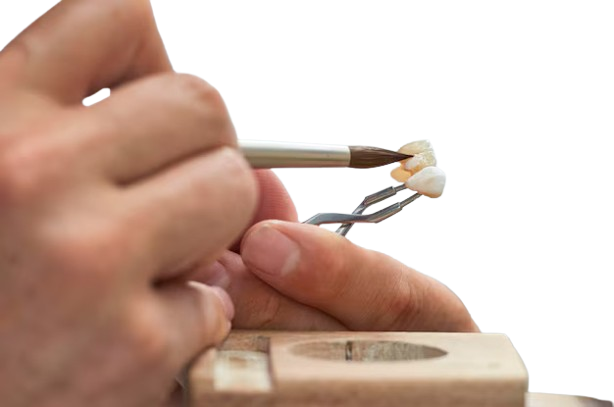
Composite resin is also used for cosmetic bonding - a technique where the material is applied to the front surface of teeth to correct chipping, discolouration, slight misalignment, or to close small gaps between front teeth.
Composite bonding is one of the most versatile and minimally invasive cosmetic dental treatments because it adds material to the tooth without removing enamel. At Patil's Dental Care, Dr. Patil applies composite bonding with an eye for natural aesthetics - matching translucency, surface texture and colour to surrounding teeth. The result is a correction that blends seamlessly with the smile.

This is listed as one of the specific services Dr. Patil is known for (referred to as "composite bondings" in his clinical profile) and it is an excellent choice for patients in Wakad seeking smile improvement without the cost or invasiveness of porcelain veneers.
How Long Do Composite Fillings Last?
A well-placed composite filling in a posterior tooth lasts 7-12 years on average. Longevity depends on the size of the filling, the location (fillings in molars endure higher forces than those in front teeth), oral hygiene and whether the patient grinds their teeth.
Composite is softer than ceramic (like inlays /onlays) and natural enamel, so large posterior restorations subjected to heavy bite forces may wear or chip over time. Regular check-ups allow Dr. Patil to identify any wear or marginal breakdown early and repair or replace the filling before the underlying tooth is compromised.