
Root Canal Treatment in Wakad (RCT & Re-RCT) – Painless Endodontics at Patil's Dental Care
Home / ENDODONTICS
Root canal treatment (RCT) in Wakad is available at Patil's Dental Care by Dr. Mangesh Kadu Patil. RCT removes infected pulp from inside the tooth, relieves pain and saves the tooth from extraction. Re-RCT (root canal retreatment) is also available for previously treated teeth that develop recurring issues. Rotary endodontic instruments are used for precision and comfort.
What Is a Root Canal? Understanding the Procedure That Gets the Most Fear but Least Deserves It
Of all the dental treatments in existence, root canal treatment - commonly called RCT - carries the worst reputation. Patients who have never had one dread it intensely, often based on stories they have heard. The reality, for the vast majority of patients treated with modern techniques and adequate anaesthesia, is far less dramatic.
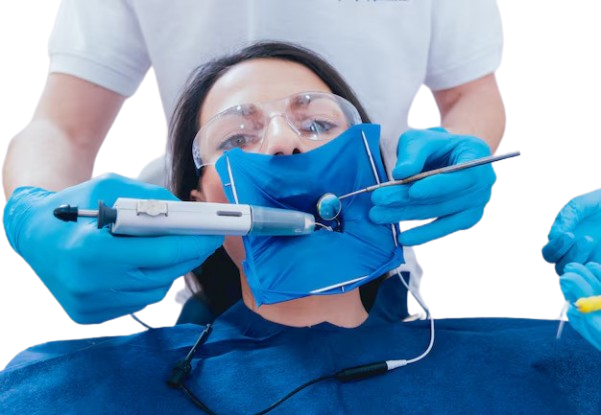
A root canal is a procedure to save a tooth whose inner pulp - the soft tissue containing nerves and blood vessels inside the tooth - has become infected or is dying. Once the pulp is compromised (by deep decay, a crack, or trauma), bacteria multiply inside the tooth, causing severe toothache, sensitivity, swelling and eventually abscess formation. Left untreated, the infection spreads to the jawbone and surrounding tissues, potentially requiring the tooth to be extracted and leading to significantly more complex treatment.
Root canal treatment removes this infected pulp, cleans and shapes the canals (the spaces inside the tooth roots that the pulp occupied), disinfects them and fills them with a stable, inert material (gutta-percha). The tooth is then restored - usually with a crown - and continues to function normally, often for many more years.
At Patil's Dental Care in Wakad, RCT is performed using rotary endodontic instruments - mechanised files that make canal cleaning faster, more thorough and less uncomfortable than manual techniques.
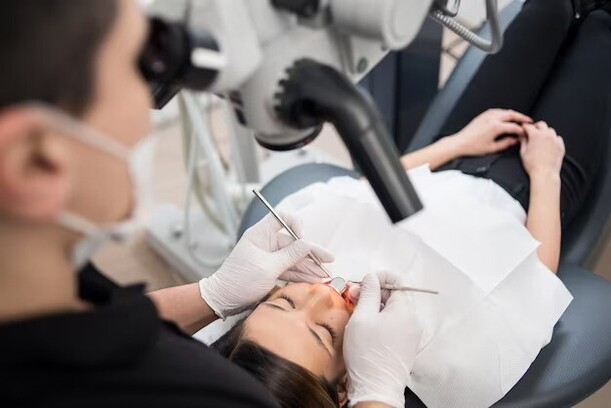
Signs That You May Need Root Canal Treatment in Wakad
The following symptoms suggest the dental pulp may be infected or dying and that root canal treatment should be assessed promptly: severe, spontaneous toothache that occurs without chewing or biting; pain that wakes you at night; prolonged sensitivity to cold or heat that lingers after the stimulus is removed; tenderness when biting or touching the tooth; swelling of the gum near the tooth, or a small pimple-like bump (sinus tract) on the gum indicating chronic infection drainage; tooth discolouration (darkening, often months after trauma); and visible deep decay or a large cavity near the tooth's centre.
In Wakad, patients experiencing severe tooth pain frequently contact Patil's Dental Care for urgent appointments. Early intervention - before the infection becomes an acute abscess - generally means simpler treatment, faster healing and a more comfortable procedure.
The RCT Procedure at Patil's Dental Care in Wakad: Step by Step
Step 1: Local anaesthesia is administered to completely numb the tooth and surrounding area. Despite what people fear, a tooth with an acute infection can be anaesthetised effectively with proper technique and dosing.
Step 2: A rubber dam is placed around the tooth - a thin sheet of latex or non-latex material that isolates the tooth from the rest of the mouth, keeping saliva out of the canals and preventing swallowing of irrigant solutions. This is a key quality indicator; clinics skipping the rubber dam are cutting a crucial corner.
Step 3: An access cavity is created through the top of the tooth to reach the pulp chamber.
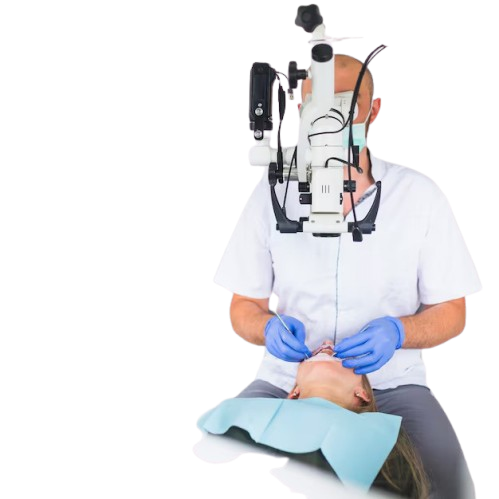
Step 4: The canals are located, measured (using an electronic apex locator and X-ray) and the infected pulp is removed and the canals are shaped using rotary NiTi (nickel-titanium) files. These are more flexible and faster than hand files, allowing better access to curved canals.
Step 5: The canals are irrigated with sodium hypochlorite (a disinfecting solution) to kill remaining bacteria and remove debris.
Step 6: The canals are dried and filled with gutta-percha (a rubber-like material) and sealer cement, right to the root tip, blocking bacteria from re-colonising the space.
Step 7: The tooth is closed with a temporary or permanent filling. A crown is placed in a subsequent appointment for most posterior teeth.
A single-rooted tooth can often be completed in one sitting. Multi-rooted teeth (molars, upper premolars) may need two appointments, particularly in cases with complex anatomy or severe infection.
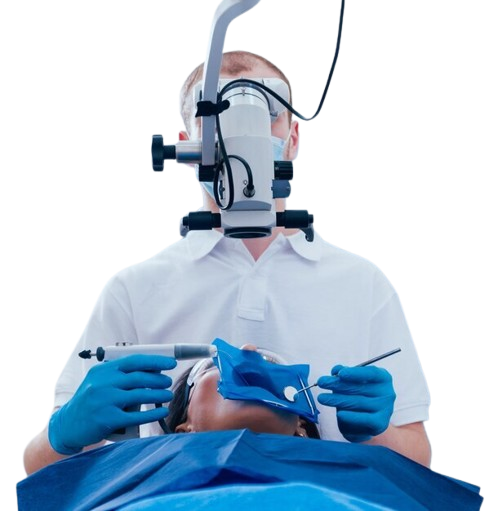
Re-RCT in Wakad: Root Canal Retreatment Explained
Re-RCT (root canal retreatment) is the procedure performed when a tooth that previously had root canal treatment develops recurring problems - pain, swelling, infection returning, or a shadow on the bone visible on X-ray (periapical pathology).
Why does a treated tooth sometimes fail? The most common reasons are: incomplete initial treatment (missed canals, poorly cleaned canals, short fills), contamination of the canals after treatment (due to a crown that leaked , a filling that broke down, or delayed crown placement), complex canal anatomy that was not addressed the first time, or persistent infection with particularly resistant bacteria.
Re-RCT involves removing the original filling material from the canals (which is a more complex process than first-time RCT), re-cleaning and disinfecting and re-filling the canals with fresh material. The success rate of Re-RCT is slightly lower than first-time RCT, but in many cases it is a viable option for saving the tooth and avoiding extraction and implant treatment.
At Patil's Dental Care in Wakad, Re-RCT cases are assessed carefully - the anatomy is reviewed on X-ray, the probable cause of failure is identified and the prognosis is discussed honestly with the patient before deciding to proceed.
Why a Crown After RCT Is Not Optional in Wakad
Many patients in Wakad complete root canal treatment and then delay or avoid getting the recommended crown. This is one of the most common causes of tooth loss despite successful RCT. The reason a crown is needed: a root-canal-treated tooth has lost its internal blood supply, making it drier and more brittle than a living tooth. Without a crown to protect it, the tooth is highly likely to fracture under biting forces - often catastrophically (a vertical crack that necessitates extraction). The crown is the final step that completes the root canal treatment and protects the investment made in saving the tooth.