
Dental Bone Grafts in Wakad – Jaw Bone Regeneration for Dental Implants at Patil's Dental Care
Home / BONE GRAFTS
Dental bone grafting in Wakad is performed at Patil's Dental Care by Dr. Mangesh Kadu Patil. Bone grafts regenerate lost or insufficient jawbone to support dental implants. Grafting material (synthetic, allograft, or autograft) is placed in the deficient site and allowed to integrate over 3-6 months before implant placement.
Why Would a Dentist Recommend a Bone Graft?
When a tooth is lost, the jawbone that surrounded and supported that tooth's root begins to resorb - essentially shrinking away from the inside because it no longer receives the stimulation a tooth root provides. This process begins within weeks of tooth loss and continues over months and years. A jaw that held a molar for 30 years and then lost it to extraction may have noticeably less bone in that area within 12-18 months.
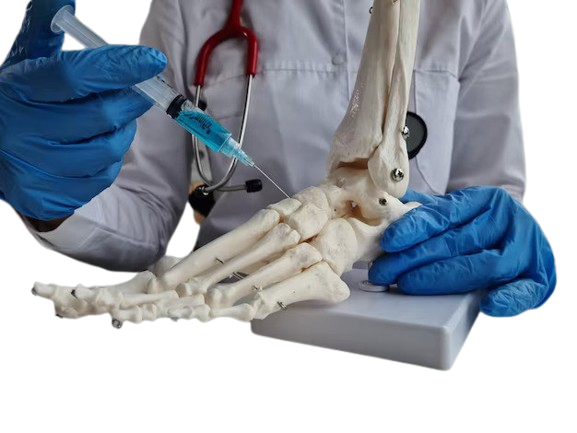
This bone loss matters enormously when the patient later decides they want a dental implant to replace the missing tooth. An implant is a titanium screw that must be anchored in adequate bone - there must be enough width, height and density for the implant to achieve primary stability during placement and then integrate successfully. When the bone volume is insufficient, the implant cannot be safely or reliably placed.
A dental bone graft addresses this problem by adding bone material to the deficient site, stimulating new bone formation and restoring the volume needed for implant support. At Patil's Dental Care in Wakad, Dr. Mangesh Kadu Patil performs bone grafting as an integrated part of the implant treatment workflow - meaning patients do not need to be referred to a different specialist for this procedure.
Types of Bone Graft Materials Used in Wakad
Autograft (Patient's Own Bone)
Bone harvested from the patient's own body - typically from the jaw itself (from an area near the wisdom tooth, the chin, or the palate) or from the hip or shin in very large defects. Autograft is considered the gold standard because it contains live bone cells and growth factors that actively promote new bone formation. The main drawback is the need for a second surgical site.
Allograft (Donor Bone)
Processed human donor bone (from a bone bank) that has been sterilised and freeze-dried to remove any cellular content while preserving the mineral scaffold. It is safe, widely used and avoids the need for a second harvest site. It acts as a scaffold that the patient's own bone cells grow into over time.
Xenograft (Animal-Derived Bone)
Usually bovine (cow) or porcine (pig) bone that has been processed to remove organic components, leaving only the mineral matrix. Widely used in implant dentistry with a long safety and efficacy record.
Alloplast (Synthetic Bone Substitute)
Synthetic materials like hydroxyapatite or beta-tricalcium phosphate that mimic the mineral content of natural bone. They are biocompatible, readily available and suitable for many grafting scenarios.
Socket Preservation: The Bone Graft You Should Have Right After Extraction
One of the most valuable but underutilised bone grafting procedures is socket preservation - placing graft material into an extraction socket immediately after the tooth is removed, before the socket has a chance to collapse and lose bone volume.
Studies consistently show that socket preservation grafts significantly reduce the bone loss that would otherwise occur after extraction, making subsequent implant placement simpler and more predictable. For any patient who knows they want an implant in the future and is having a tooth extracted, socket preservation is strongly recommended.
At Patil's Dental Care in Wakad, Dr. Patil discusses socket preservation as part of the tooth extraction planning process for eligible patients, particularly those with existing adequate bone who want to maintain it for future implant placement.
The Bone Graft Procedure and Healing Timeline
Bone grafting is performed under local anaesthesia. An incision is made in the gum to access the bone defect. The graft material is placed in the deficient area, often covered with a membrane (a resorbable collagen barrier) that prevents soft tissue from growing into the graft site and allows only bone cells to colonise it. The gum is then sutured closed.
Healing time depends on graft size and type. Minor grafts may integrate sufficiently for implant placement within 3-4 months. Larger grafts or those involving significant bone defects may require 6-9 months of healing before the site is ready for the implant. Dr. Patil monitors healing radiographically (via X-ray or CBCT) before giving the green light for implant placement.